NATIVE.
BOTH PLATFORMS.
Written properly for iOS and separately for Android. No universal tool squeezing one app into two half-fitting versions.
CROSS-PLATFORM IS A BUDGET DECISION.
NOT A PRODUCT DECISION.
Universal frameworks exist to save the people building the app, not the people using it. They add a layer between the product and the phone — and that layer is exactly where speed, size and feel get lost.
Writing both platforms properly takes more work. The person holding the phone gets the benefit.
Three things people actually notice
Nobody opens an app and thinks about the framework. They notice these.
It answers immediately
The app responds the moment it's touched. Scrolling stays smooth, animations run at the system's own pace instead of a framework's approximation of it. Nothing about it feels like it's catching up.
Installs before interest fades
Extremely small download size. It arrives even on a weak mobile connection and is ready to use while the person still wants to try it — which matters enormously at a trade show, in a shop, or next to a device someone just unboxed.
Reaches the whole device
Sensors, Bluetooth, camera, haptics, notifications, widgets, background behaviour — used directly, not through whatever a plugin happens to support this year. When hardware is involved, this stops being a preference and becomes a requirement.
Already have the hardware?
A good device with a mediocre app feels like a mediocre product. That judgement is unfair, and it happens anyway.
Most of what people remember about a physical product happens on the screen in their hand — the first pairing, the moment it responds, the small animation that says it worked, the notification that arrives at the right time instead of the wrong one.
That part can be rebuilt without touching your hardware.
onboarding · pairing · control · feedback · haptics · notifications · widgets · firmware updates
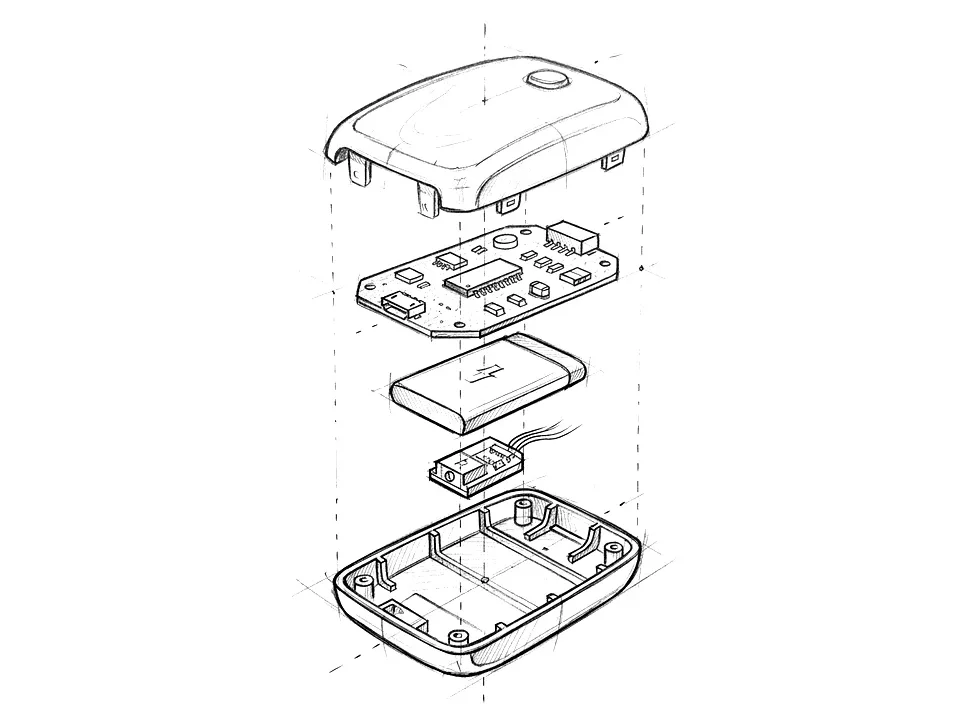
TECHNOLOGY CAN FEEL HUMAN.
Logic decides what a product does. Emotion influences whether people want to use it again. A device becomes a favourite object because of how it answers — the timing, the sound, the small physical response in the hand.
Before you ask
The short version. Everything else — just ask.
Isn't native twice the work?
More work than a universal build, yes. But the alternative usually spends that saved time later — on workarounds, on plugins that don't quite do it, and on explaining why the app feels slower than the product deserves.
Do we need both platforms at once?
Rarely. A prototype usually starts on one platform — the one that reaches the people whose reaction matters most. The second follows once the first has proven the idea.
Can you take over an existing app?
Often yes, and it's frequently the fastest win available. An existing product with a weak app has all the hard parts solved already.
What does it cost?
It depends entirely on the product. A prototype starts from €3,000 excl. VAT, which is usually the sensible way to find out what the full thing should be.
GIVE IT AN EXPERIENCE.
Native, fast and small — on the device people already have in their hand.
TELL ME ABOUT THE APPNo polished brief required. Don't let the budget stop the conversation.